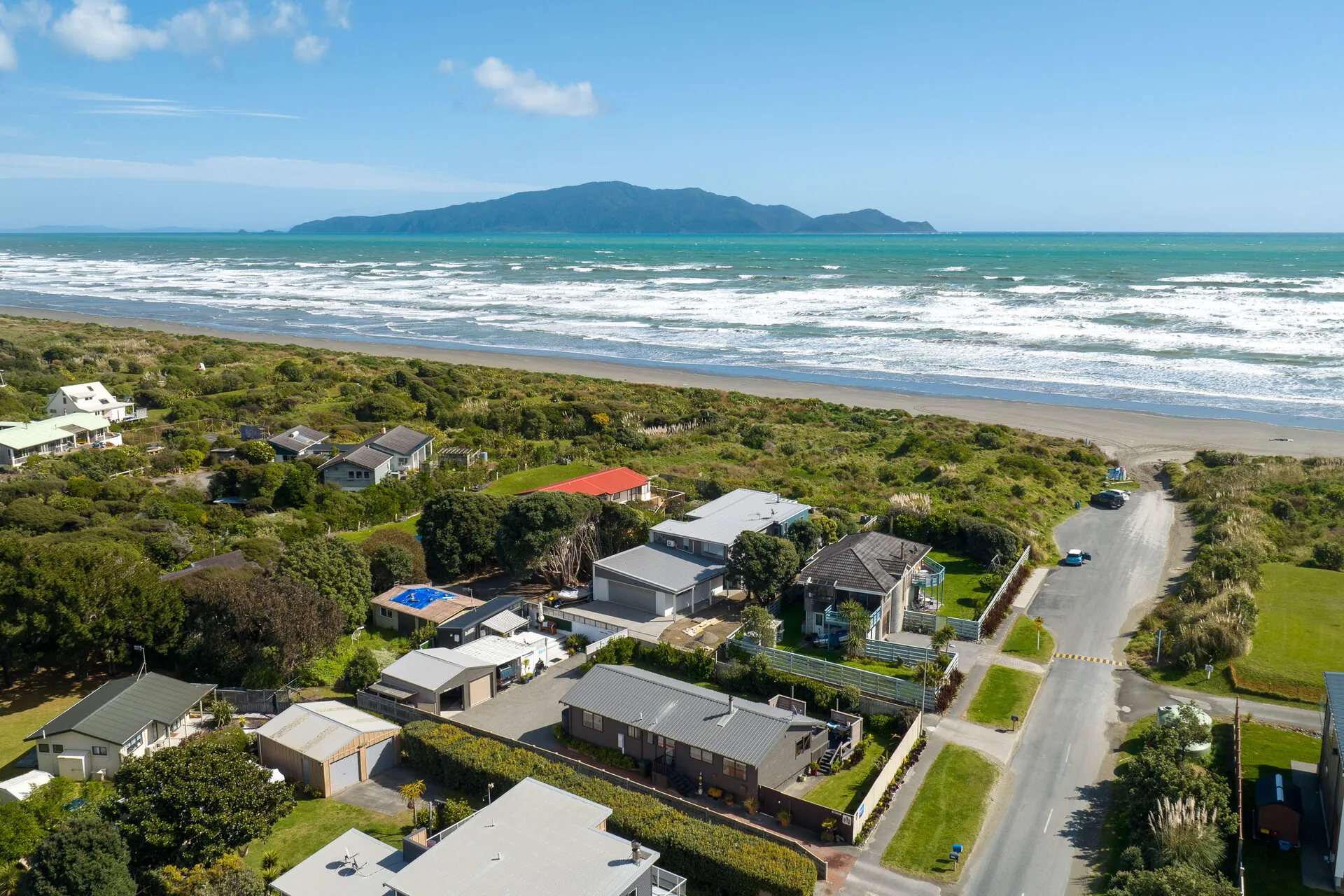
Building on the Kapiti Coast is different from building almost anywhere else in the Wellington region. Our recent projects include a beachfront home at Peka Peka, a hillside home in Waikanae and a lifestyle-block home in Ohau, and each site asked something different of the build.
Here’s what we’ve learned from our own projects about what coastal and rural sites really demand, and what to think about before you start.
Salt air changes the materials list
Along the coast, salt carried on the wind slowly attacks anything metal: fixings, flashings, fasteners, joinery hardware and roofing. The building standard NZS 3604 sorts sites into exposure zones, and the closest to the sea sit in Zone D, the high-risk sea-spray zone.
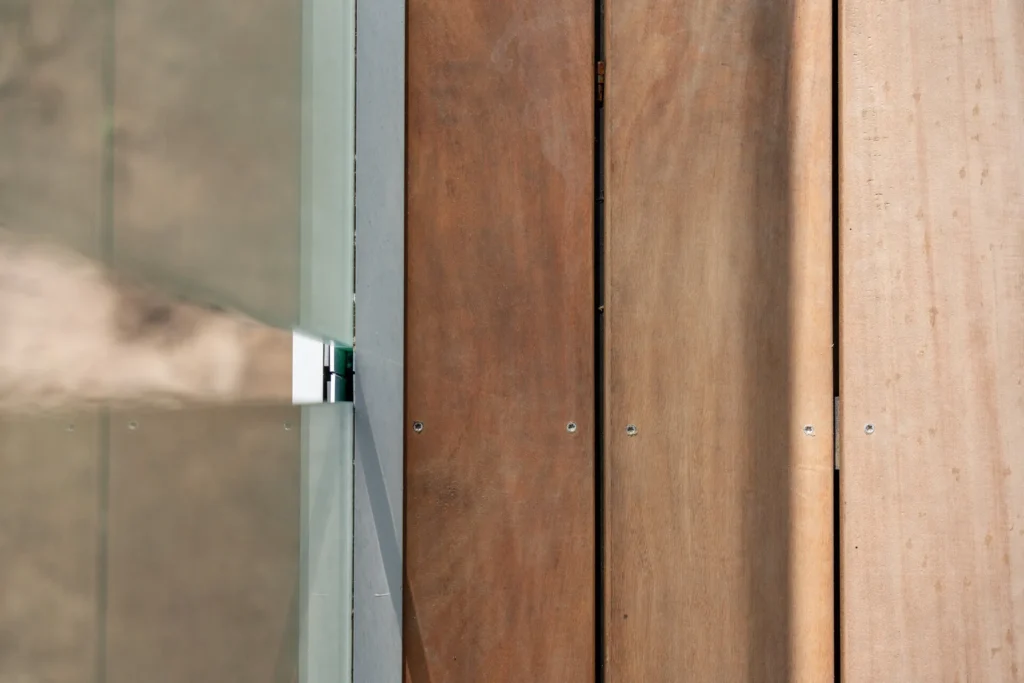
That zone decides what goes into the build. Fixings, cladding and roofing all need to be specified for it, not chosen off the shelf. On Beachfront Living Elevated at Peka Peka, every material and junction, from the cladding to the joinery to the external stair, was chosen to stand up to salt and coastal weather for decades.
Design for the wind and the view
The best coastal views usually come with the most exposure. The answer is rarely to wall the weather out, because that walls the view out too.
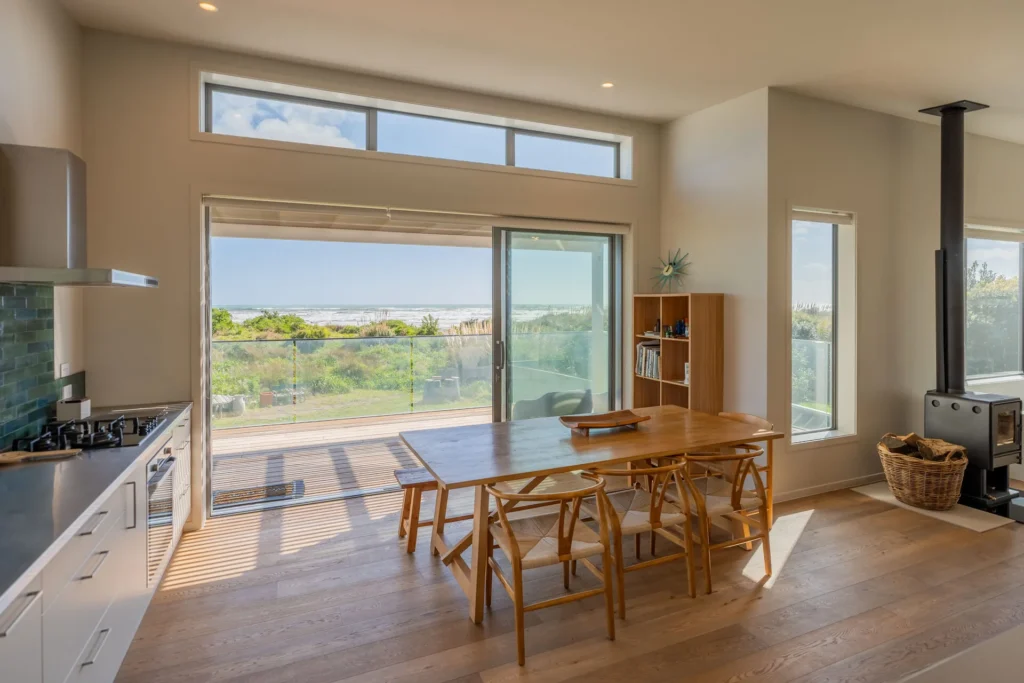
At Peka Peka, the owners wanted to see the sea, the dunes and Kapiti Island from the moment they woke up. We built an upside-down layout, with the main living lifted above the dune line. A timber louvred pergola shelters the deck, and glass balustrades keep the outlook open without giving the wind a free run. On Coastal Cube Living on Tutere Street, a three-level cube form and dark cladding balance privacy with views out to the island.
Dunes, consents and the neighbours
Coastal land often carries extra rules. Dunes, hazard overlays and protected habitat can all add steps before a single post goes in the ground.
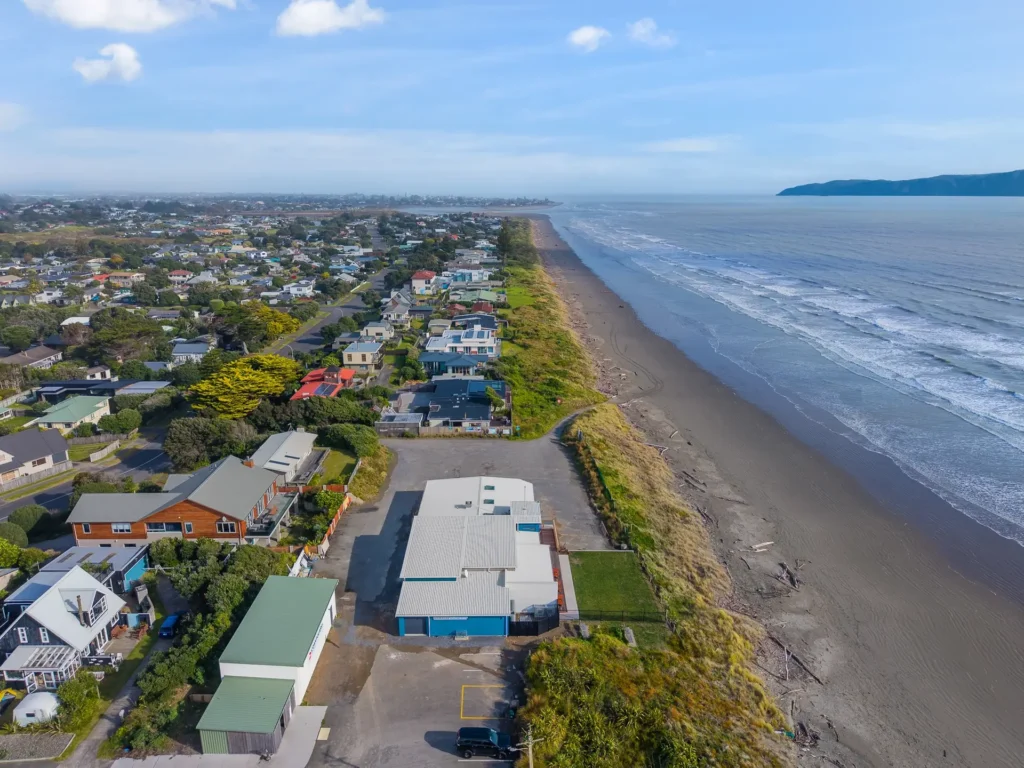
The Waikanae Boating Club rebuild is a good example. The club spent years on resource consent, building consent and environmental reports, including checks for blue penguins nesting in the neighbouring dunes. Once we started, the work had to be sequenced around a live club and a busy public beach, working alongside the club, Coastguard and Kapiti Coast District Council. The old council toilet block came down, and the Coastguard rescue vessel moved into its own new shed to free space for the larger clubhouse.
Hillside sections reward careful planning
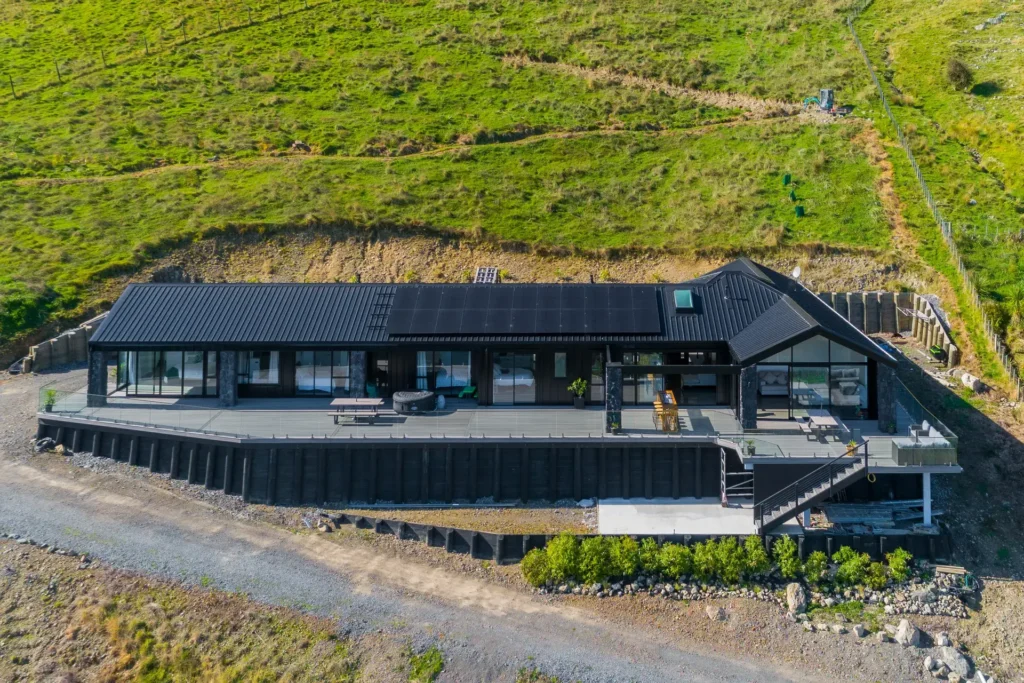
Inland from the beach, the Kapiti Coast rises quickly into hill country, and an elevated section can give you views right across the coast. Getting there takes more planning: access for machinery, foundations suited to the slope, and a design that works with the land rather than against it.
Dream on Huia St in Waikanae sits high on its section, with angular rooflines and extensive glazing that make the most of the panoramic outlook.
Lifestyle blocks are their own kind of build
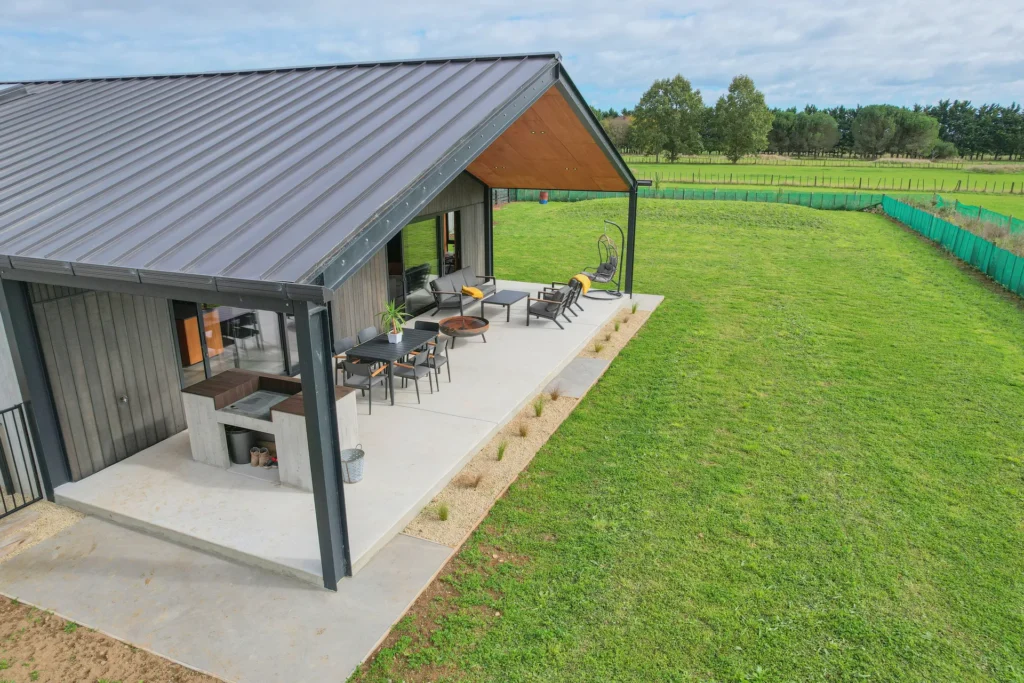
From Te Horo to Ohau, several of our recent homes sit on lifestyle blocks. These homes tend to be larger, single-level and designed to sit low in the landscape, and they need the practical services a rural property depends on, from water tanks to landscaping.
Country Estate Elegance at Muhunoa East Road, Ohau, is a substantial modern-country home, with schist-toned block, a dark standing-seam roof and soaring raked ceilings inside. Rural Barn Retreat takes the barn form literally: exposed steel portal framing, dark timber cladding and board-formed concrete walls that keep the grain of the timber formwork.
Before you buy or build: five questions to ask
- How close is the site to the sea? Your exposure zone affects materials, fixings and cost.
- What does the district plan say? Check the Kapiti Coast District Council or Horowhenua District Council maps for coastal, flood and other hazard overlays.
- How exposed is it? Wind shapes the layout, the decks and where you’ll actually sit outside.
- Can machinery get in? Steep or narrow access adds time and cost.
- What services are there? On a rural block, plan for water storage, power and access early.
Building with a local team
We’re based in Te Horo and have been building across the Horowhenua, Kapiti Coast and wider Wellington region since 2017. We know these sites because we build on them, and every project in our portfolio started with questions like the ones above.
Thinking about building on the Kapiti Coast? Get in touch and we’ll talk through your site, your ideas and your budget.